

Values, ethics and competences
CLD is a value-based practice. The Values, Code of Ethics and Competences provide the basis for CLD professional practice that happens in varied settings across the public and third sectors.
Values
CLD professionals commit themselves to the values which are fundamental to the practice of CLD across all of its settings.
- Self-determination - Respecting the individual and valuing the right of people to make their own choices.
- Inclusion - Valuing equality of both opportunity and outcome, and challenging discriminatory practice.
- Empowerment - Increasing the ability of individuals and groups to influence issues that affect them and their communities through individual and/or collective action.
- Working collaboratively - Maximising collaborative working relationships in partnerships between the many agencies which contribute to CLD, including collaborative work with participants, learners and communities.
- Promotion of learning as a lifelong activity - Ensuring that individuals are aware of a range of learning opportunities and are able to access relevant options at any stage of their life
These values have been identified by the CLD Standards Council.
Code of Ethics
The Code of Ethics is part of a foundation for our profession, together with our values and principles, the Competences for CLD and the national professional learning strategy. It has a central role in defining and communicating what CLD work is.
- Primary client
- Confidentiality
- Social context
- Co-operation
- Equity
- Professional Learning
- Empowerment
- Self-awareness
- Duty of Care
- Boundaries
- Transparency
- Self-care
Ethical Practice - Competent Practitioners
A learning resource developed to assist CLD practitioners and everyone with an interest in CLD to use the Code of Ethics to inform, develop and challenge practice and to promote the use of the Code in their organisation (and with partners).
Competences
The Competence Framework brings together the knowledge, skills and personal characteristics that make up competence in CLD practice. The Framework is used by practitioners, training providers and employers to reflect on, develop and strengthen practice.
The Framework comprises the 7 competences, 5 key attributes and the definition of a competent practitioner.
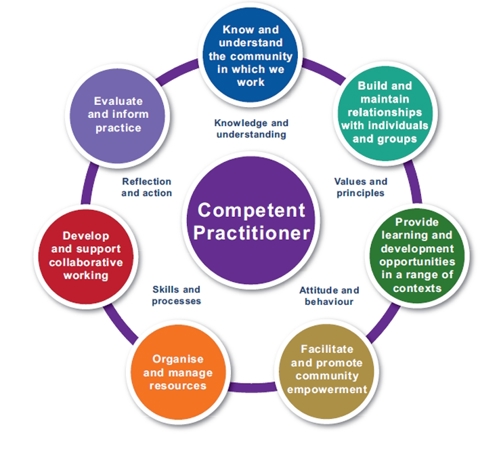
The framework consists of 3 elements, illustrated in the diagram above:
The 5 key attributes are:
- knowledge and understanding
- CLD values and principles
- attitude and behaviour
- skills and processes
- reflection and action
The 7 competences are:
- know and understand the community in which we work
- build and maintain relationships with individuals and groups
- provide learning and development opportunities in a range of contexts
- facilitate and promote community empowerment
- organise and manage resources
- develop and support collaborative working
- evaluate and inform practice