

Examples of professional learning and development
Professional learning and development can be a range of opportunities that relate to a CLD practitioner’s practice.
How professional learning and development might be progressed
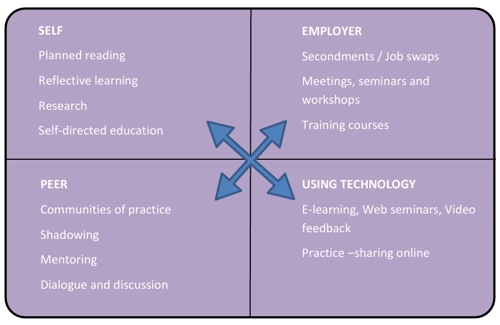
By yourself:
- planned reading
- reflective learning
- research
- self-directed education
By or with your employer
- secondments or job swaps
- meetings, seminars and workshops
- training courses
With your peers
- communities of practice
- shadowing
- mentoring
- dialogue and discussion
By using technology
- E-learning, web seminars, video feedback
- practice –sharing online
Illustrations of professional learning and development opportunities
- self-evaluation and critical reflection processes
- experiential, action or enquiry-based learning
- professional dialogue with colleagues, other professionals and learners
- focused professional reading and research
- leading or engaging in practitioner enquiry/action research
- critical analysis of reading, learning and impact on professional practice
- learning about aspects of the CLD or approaches to learning and development
- peer support e.g. coaching or mentoring
- visits/peer observation
- online learning/blogs
- work shadowing
- co-operative or team working
- participation in collaborative activity e.g. communities of practice/learning
- leading or participating in a working or task group
- planning learning which is inter-professional or cross-sector
- participation in activities relating to assessment, moderation and evaluation
- secondments, acting posts and placements
- formal study and qualifications
- accredited courses or activity related to achieving national professional standards for CLD
- professional/academic conferences